Promoter vs. Repressor: Your Cell’s Best-Selling Switch Pack!
Promoter and repressor: the switch pack
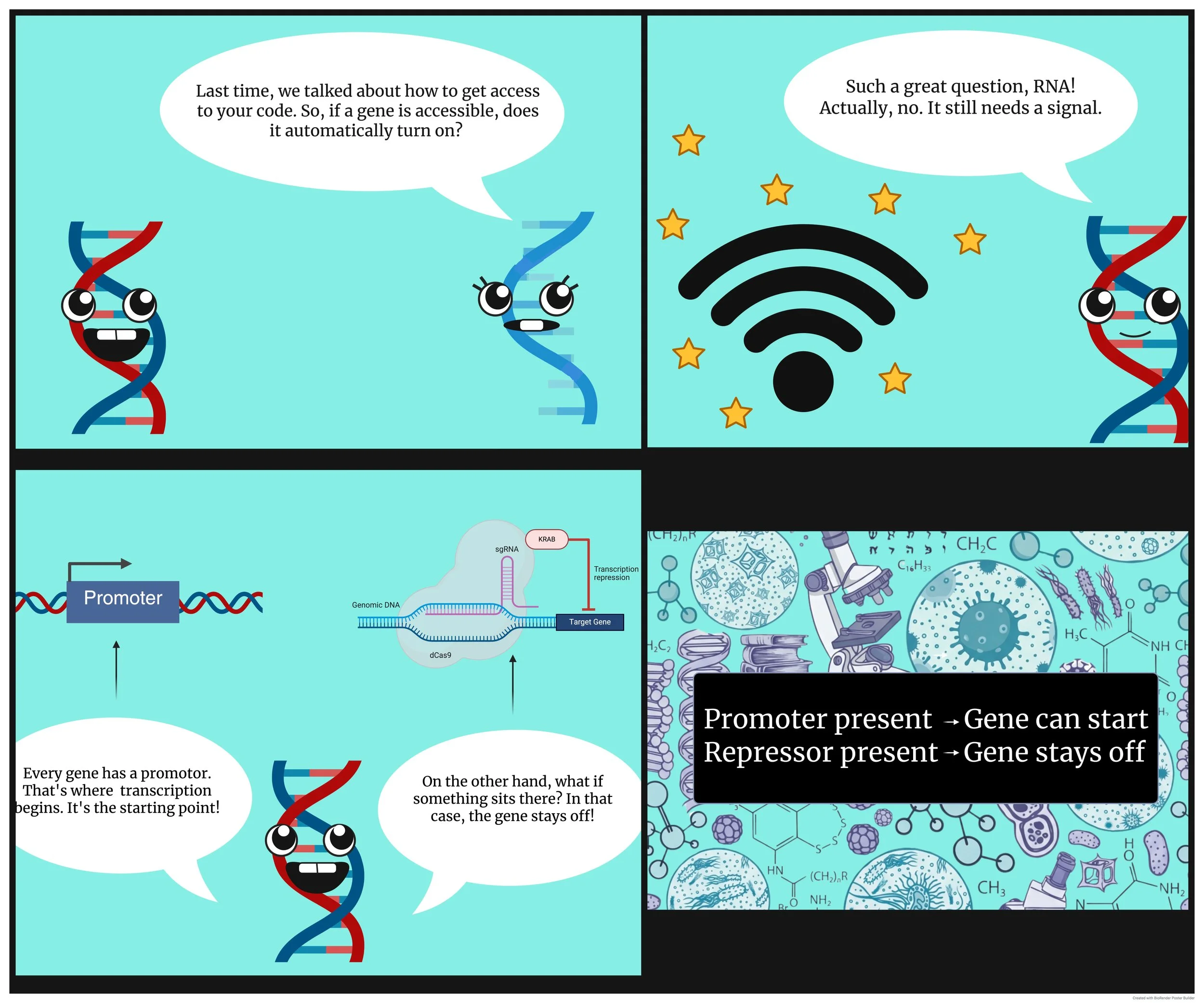
Promoters and repressors play tug-of-war roles in controlling when and how much a gene is expressed.
Promoter: a specific DNA sequence just upstream of a gene that acts like a clear “start here” sign for RNA polymerase and the transcription machinery. It determines exactly where transcription begins and strongly influences how robustly a gene is turned on under different conditions. Think of it as the stage and spotlight that invite the actors (RNA polymerase and transcription factors) to start the show.
Repressor: a gene that encodes a protein able to recognize and bind specific DNA sites (often positioned near or directly on the promoter) to physically block or hinder transcription. It’s the molecular off-switch or brake, sitting on the stage to prevent the actors from performing. Repressors can respond to signals—binding small molecules or being modified—to let go of the DNA and allow transcription to proceed.
Together, promoters set the stage for transcription and repressors apply the brakes. This dynamic lets cells fine-tune gene activity precisely in response to developmental cues, cellular needs, and environmental changes—like dimming or cutting the lights in a theater depending on the scene.